What is astroturfing? It is the practice of faking public support: a company, government, campaign or interest group hides behind invented ordinary people so that a message looks like it came from the grassroots. The name comes from AstroTurf, the artificial grass, because the support looks real from a distance but nothing is growing underneath.
Astroturfing matters because we all use other people as a shortcut. If hundreds of reviews praise a product, or thousands of accounts seem angry about a policy, we assume there must be something in it. Astroturfing hijacks that instinct.
Where the word astroturfing comes from
The term entered politics in 1985, when US Senator Lloyd Bentsen said a Texan could tell the difference between grass roots and AstroTurf. He was describing a flood of letters that looked spontaneous but had been organised by an industry lobby. The tactic is much older than the word, and the internet has made it cheap.
What does astroturfing look like?
Astroturfing is not one technique. It is a goal, to manufacture the appearance of consensus, reached by many routes.
Astroturfing in politics
Front groups with folksy names, letter-writing campaigns run by consultants, and networks of social media accounts posing as local voters. State actors do this too. In September 2024 the US Justice Department seized 32 internet domains it said were part of a Russian government-directed influence campaign known as Doppelganger, which imitated real news sites to spread its messages. It is a textbook case of disinformation rather than honest misinformation: the deception is deliberate.
Astroturfing on social media
Bot accounts, paid influencers who do not disclose payment, and coordinated groups of real people all posting the same talking points. Meta publishes regular reports on networks it removes for what it calls coordinated inauthentic behaviour, and they show the same pattern again and again: fake personas built to look like locals, pushing one line.
Astroturfing in marketing
Fake reviews, staff posing as happy customers, review sites secretly owned by the brand they rate, and bought followers or views that make an account look popular. This is the most common kind, and the one most likely to cost you money.
Astroturfing with AI
Generative AI lowers the cost even further. One operator can now produce thousands of fluent, slightly different posts or reviews in minutes. The words no longer give the game away, so the behaviour behind them matters more.
How to spot astroturfing: the warning signs
- Sudden waves. A burst of near-identical posts or reviews in a short window, often after a long silence.
- Copy and paste language. The same phrases, hashtags or odd spellings repeated across many accounts.
- Thin profiles. New accounts, few followers, stock or generated profile pictures, and a history that is only about one topic.
- Strange timing. Accounts that post around the clock or all at once, like a shift starting.
- Emotion over evidence. Outrage, fear or flattery with no sources. The emotional hooks are covered in our guide on how to spot fake news.
- Hidden funding. A grassroots group whose website names no members, no address and no funders.
- Perfect reviews. Five stars with vague praise, no detail of actual use, and reviewers who have only ever reviewed one company.
No single sign proves anything. Real people post in bursts too. Look for several signs together, and ask who benefits if you believe the crowd.
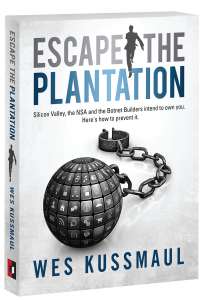
Astroturfing works because online it is so easy to pretend to be someone you are not, a problem Wes Kussmaul tackles head-on in Escape the Plantation, and you can get a free copy at the end of this article.
How to check whether a campaign is genuine
- Look up the group. Search the organisation’s name with words like funding or founder. In the UK, check Companies House or the Charity Commission register. In the US, nonprofit tax filings are often searchable online.
- Read laterally. Leave the page and see what independent sources say about the group or claim, instead of judging it by its own website.
- Check a sample of accounts. Open five or six profiles behind a trending claim. Note their age, posting history and pictures. A reverse image search can show whether a profile photo was taken from elsewhere.
- Compare the timing. Did the posts appear just before a vote, a launch or a news event? Coordinated pushes often line up with a decision someone wants to influence.
- Name the technique. Many campaigns lean on the bandwagon device, everybody agrees so you should too. Our guide to propaganda tactics shows how to recognise it.
Is astroturfing illegal?
Political astroturfing is often legal, though election finance rules may apply to who pays for it. Commercial astroturfing is a different story, and both the US and the UK now ban the most common forms.
United States
The Federal Trade Commission’s rule on consumer reviews and testimonials took effect on October 21, 2024. It bans fake reviews, including AI-generated ones and reviews by people who never used the product, buying positive or negative reviews, undisclosed reviews by company insiders, company-run review sites posing as independent, and buying or selling fake followers or views. The FTC can seek civil penalties of more than $50,000 per violation from businesses that break it knowingly.
United Kingdom
Since April 6, 2025, the Digital Markets, Competition and Consumers Act 2024 has made fake reviews and concealed paid-for reviews a banned practice. Commissioning, submitting or helping to publish them is automatically unlawful, and the Competition and Markets Authority can fine businesses up to 10% of global turnover without first going to court.
European Union
EU consumer law also bans fake reviews, and the Digital Services Act requires the largest platforms to assess and reduce risks from manipulation of their services, including coordinated fake accounts.
Where to report astroturfing
- On the platform: use the report option for fake accounts, spam or fake reviews. Coordinated networks are removed more quickly when many users flag them.
- Fake reviews in the US: report to the FTC at reportfraud.ftc.gov.
- Fake reviews in the UK: contact the Citizens Advice consumer helpline, which passes reports to Trading Standards. You can also tell the CMA.
- Foreign influence or election content: report it to the platform, and in the UK you can raise concerns about campaign spending with the Electoral Commission.
Frequently asked questions
What is astroturfing in simple terms?
It is fake grassroots support. Someone with an agenda pretends to be many independent ordinary people so their message looks popular and spontaneous.
What is astroturfing on Reddit and social media?
It usually means accounts, paid posters or bots pushing the same product, opinion or narrative while posing as unconnected users, often to make a view look like the majority.
Is astroturfing illegal?
Fake reviews and bought followers used to sell products are now unlawful in the US and the UK. Political astroturfing is often legal, but it may breach platform rules, election spending laws or foreign interference laws.
What is the difference between astroturfing and grassroots?
Grassroots support comes from real people acting on their own initiative. Astroturfing is organised and paid for by someone who hides their role.
Can AI be used for astroturfing?
Yes. Generative AI makes it cheap to write thousands of varied posts and reviews, which is why the FTC rule explicitly covers AI-generated fake reviews.
Related reading
- Misinformation vs Disinformation: The Difference Explained
- Propaganda Tactics: The Nine Moves to Recognise
- How to Spot Fake News: The Tricks That Do the Work
- Persuasion Tactics That Work on You Without Asking
Astroturfing thrives in a world where nobody online has to stand behind their words. Wes Kussmaul’s Escape the Plantation describes a different model: an identity you own and control, with people kept accountable for what they publish while still able to stay anonymous. Enter your email below to get your free copy and follow Goebbelsology’s work on propaganda and media literacy.