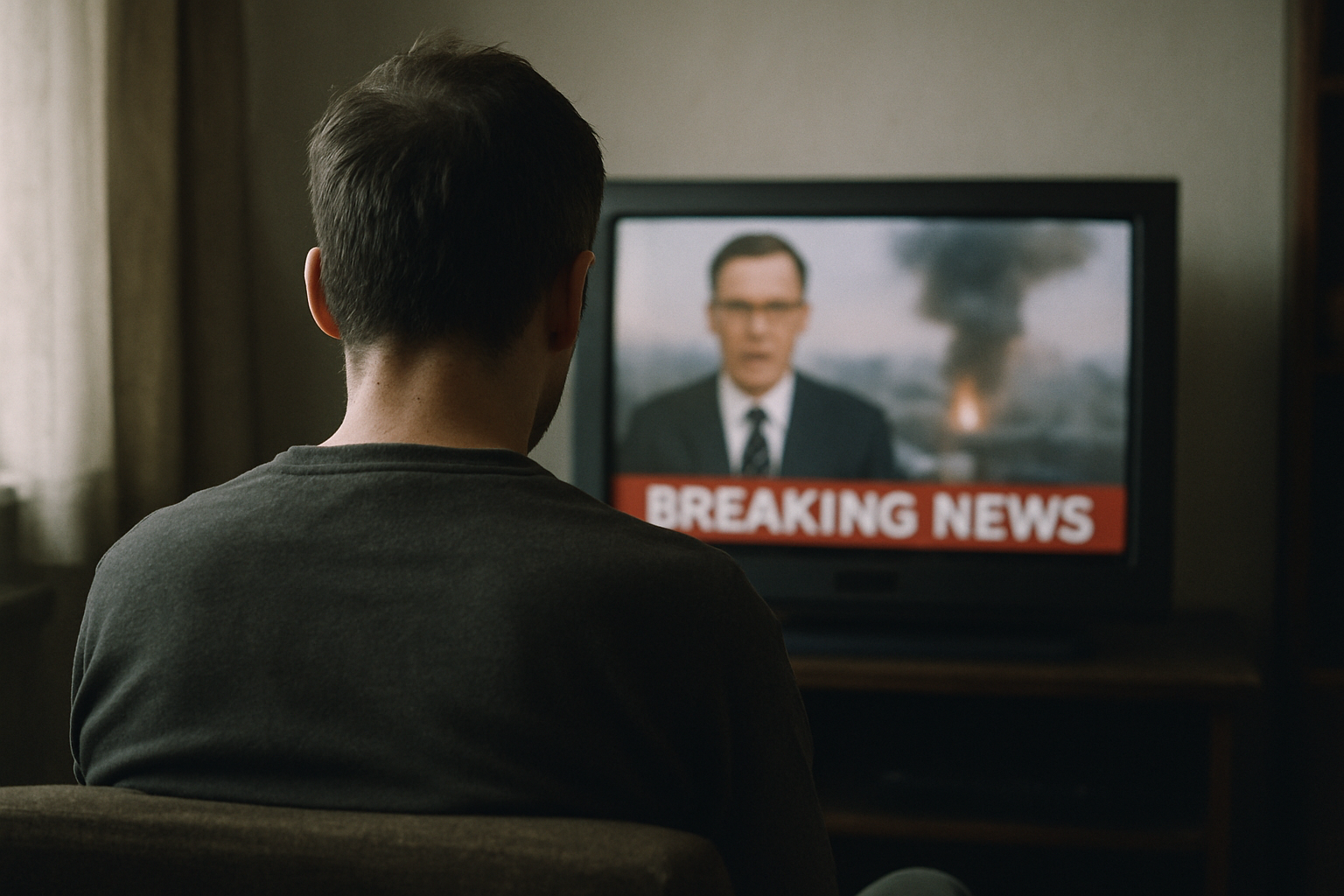
Twenty-five years after the attacks of 11 September 2001, the anniversary is generating another wave of retrospective coverage, personal testimony, and political commentary. That is entirely predictable. What is worth paying attention to is the less visible process running underneath the commemoration: the way a shared traumatic memory gets shaped, loaded, and aimed. The 9/11 anniversary disinformation problem is not mainly about false facts. It is about how true feelings get attached to contested interpretations.
What happened
On 11 September 2001, a sequence of coordinated attacks killed thousands of people. The events were broadcast live, in real time, into homes around the world. That made it one of the most collectively witnessed moments in modern history — not read about the next morning, but watched as it happened.
That real-time quality matters. When people experience something through a screen as it unfolds, the emotional imprint is different from reading about it later. The shock is personal even when the event is distant. Communicators of every kind have drawn on that imprint ever since.
Twenty-five years on, the anniversary is again being marked. The source material for this piece notes that the day changed the world and that it is being commemorated. Specific claims about causes, consequences, or responsibility beyond what was publicly established at the time have not been disclosed in the source report.
Who is affected
Anyone who consumes news or social media around a major anniversary is exposed to the narrative contests that surround it. This is not limited to Americans or to people old enough to remember the day.
Younger audiences — anyone born after, say, 1995 — have no direct memory of 2001. They are particularly exposed to receiving a pre-packaged version of events without the context to push back on it. The emotional weight of the anniversary reaches them second-hand, but it still lands.
Journalists and editors face their own pressure: to frame retrospective coverage in ways that serve current political arguments rather than simply marking what occurred. And ordinary readers who want to think clearly are caught between competing versions of the same event, each presented as obvious fact.
What the real risk is
The deeper risk is not getting the history wrong. It is learning to accept emotional intensity as a substitute for evidence.
A traumatic shared memory is among the most powerful raw materials a persuader can work with, because the feeling of the event is real even when the interpretation attached to it is not. The grief is genuine. The fear was genuine. Those feelings do not belong to any argument — but they can be borrowed by one.
When a communicator pairs a genuine, visceral image or story from that day with a present-day political argument, the emotional weight of the memory transfers to the argument. This technique is sometimes called emotional anchoring: the audience is not being asked to evaluate a claim, they are being asked to feel something they already associate with truth and urgency.
Over time, repeated exposure to anniversary coverage that always points in the same direction trains audiences to treat one particular reading of events as simply what everyone knows. Other possibilities get crowded out — not disproved, just made to feel unnecessary.
This is how a historical event stops being something people examine and becomes something people feel. And feeling is much harder to argue with than a claim.
What to do today
These are concrete steps worth taking this week, as anniversary coverage circulates.
- Ask whose current agenda is served. When you encounter a retrospective piece, ask what present-day argument it is supporting. Nostalgia and grief can be genuine. They can also be strategically deployed. The two are not mutually exclusive.
- Separate the record from the interpretation. The factual record of what occurred on that day is well documented. The meaning being assigned to it — the lesson being drawn — is always a choice someone made. Hold those two things apart.
- Notice when emotional language accelerates. Phrases like “never forget”, “they want you to ignore this”, or “the real story” are signals that persuasion is the goal, not information. They are designed to make you feel that staying calm would be a betrayal.
- Seek out accounts that sit with complexity. Any piece that arrives with a clean, satisfying lesson already attached deserves more scrutiny than one that acknowledges what remains uncertain or disputed.
- Slow down when the combination is anger plus certainty. If a piece of content makes you feel afraid or outraged and simultaneously sure you are right, that combination is a reliable sign that someone is working on you. The two feelings arriving together is the tell.
Why this keeps happening
Shared trauma is a renewable resource for persuaders because the emotional response it triggers bypasses the slower, more sceptical parts of how people process information. That is not a flaw in human psychology — it is how people survive shock. But it is also a gap that gets exploited.
Anniversaries create a predictable calendar moment when audiences are already primed to engage emotionally. That predictability makes them attractive to anyone with a message to push. The sheer volume of coverage around a major anniversary makes it easy to smuggle contested interpretations inside what looks like straightforward commemoration.
There is no single actor responsible for this pattern. It emerges from the overlapping incentives of media organisations chasing engagement, political actors seeking legitimacy, and ordinary people who find genuine meaning in collective memory. No conspiracy is required. The conditions are structural.
Part of what makes 9/11 anniversary disinformation so persistent is that online systems have no reliable way to establish who is actually speaking. A message from an accountable source with a verifiable record carries the same visual weight as one from an anonymous account with no history. When the emotional content is high enough, audiences rarely stop to check. Until emotional intensity itself becomes a reason to pause rather than a reason to believe, the pattern will repeat around every significant anniversary and every moment of collective shock.
Frequently asked questions
Is it wrong to feel emotional about 9/11 anniversary coverage?
No. The events were real, the losses were real, and emotional responses to them are entirely legitimate. The problem is not feeling — it is when a persuader uses that feeling as a vehicle for an argument you have not actually evaluated. You can grieve and still ask questions about the framing.
How can I tell the difference between honest commemoration and propaganda?
Honest commemoration tends to sit with the complexity of what happened. It acknowledges what is not known or not agreed upon. Propaganda tends to arrive with a lesson already sealed — a clean line from the past event to a present-day conclusion. If the coverage seems to need your emotion more than your attention, that is a useful signal.
Why do propagandists keep returning to the same historical events?
Because the emotional work has already been done. With a well-known traumatic event, a persuader does not need to build feeling from scratch — they just need to attach their current argument to a memory the audience already carries. The older and more established the event, the more that memory has been reinforced by years of prior coverage, making it an even more efficient anchor.
Related reading
Originally reported by poynter.org. This article summarises that reporting and adds practical guidance.
Scams, fraud, bots and manufactured noise keep spreading because the internet was built with no reliable way to know who anyone actually is. Every piece of anniversary content you encounter could come from a grieving survivor, a political operative, or an automated account — and the format looks the same. Everyone deserves authenticity and accountability online, and that is the mission we are working on. Subscribe to stay ahead of the next wave.